
The Becoming of Titan's People

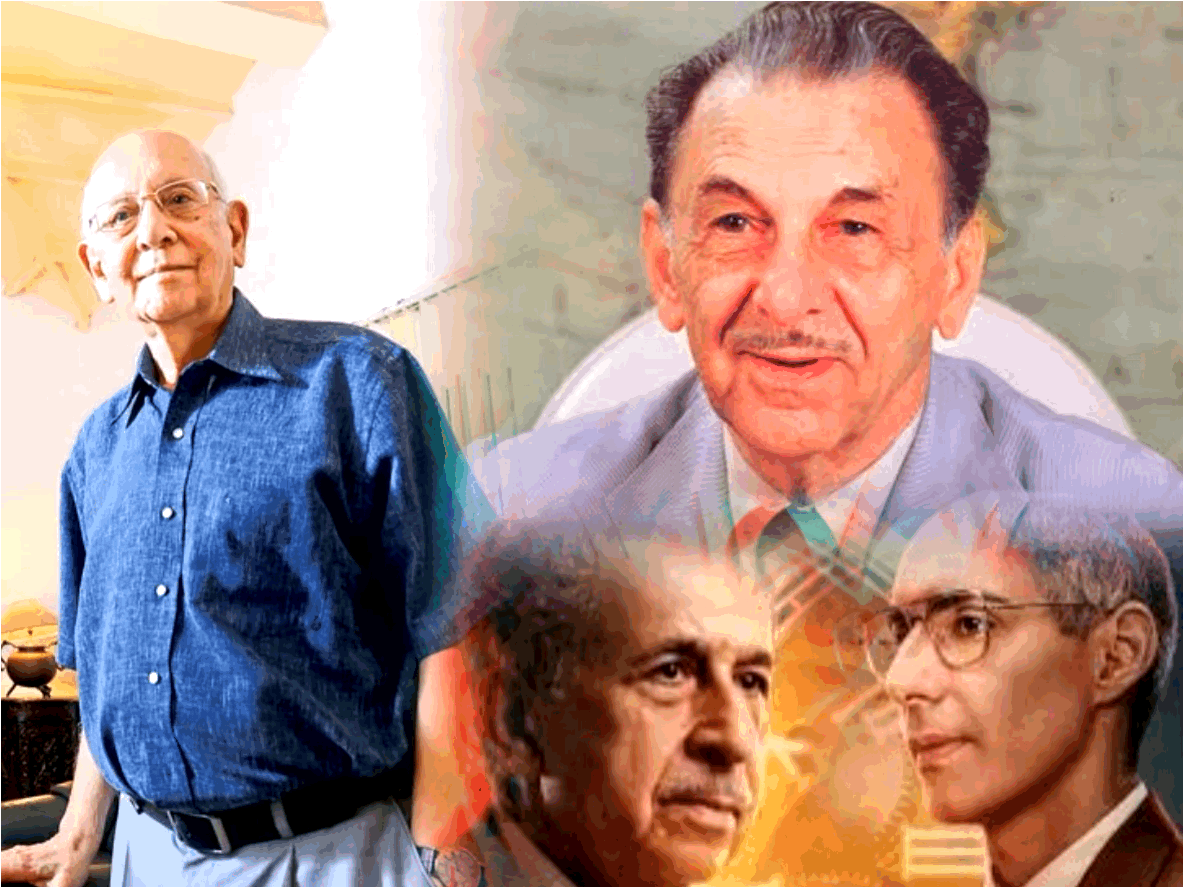
I haven't read the book on which this show is based. What follows are my reflections solely from watching Made In India: A Titan Story.
I watched Made In India: A Titan Story recently, and it stayed with me longer than I expected, not because of the business arc, which is remarkable enough, but because of what it reveals about the kind of person who builds something enduring, and the conditions that allow that person to emerge.
Xerxes Desai didn't build Titan because he had the right plan or the right moment. He built it because of who he had become over decades of genuinely paying attention to people, and because someone senior enough to matter saw that in him before it was fully formed.
The Europe chapter
Titan entered European markets with genuinely world-class watches, technically competitive with the Swiss manufacturers who had defined the industry for generations. What stopped them was not the product. The show is honest about this: established European watchmakers organised to keep Titan out, just as they had worked to contain Japanese manufacturers before. It was not a market rejection so much as a deliberate, coordinated defeat.
When Desai turned inward, Titan had eight months of runway left. That is the context that matters. With eight months of survival on the clock, under conditions of organised resistance from an entire industry, Desai challenged his engineers to build the world's thinnest watch – not the best Indian watch, but the thinnest watch anywhere, by a technical measure that no cartel could dispute. The show captures something important about how he held that challenge: there was no fear of failure in the room. The Titan Edge (a 3.5mm case with a movement 1.15mm thick) became a world record, built by a team that had been given permission to attempt something that had no guaranteed outcome.
When the path forward is closed by forces outside your control, the question worth asking is not how to reopen that path but whether there is something so technically undeniable that the conversation resets entirely.
The people chapter
Two moments in the show reveal who Desai was as a leader more clearly than any strategic decision.
The first is at the very beginning, before Titan exists as a company. Desai is seconded to CIDCO in what becomes Navi Mumbai, where there is significant worker unrest. His response to that unrest is not managerial in the conventional sense. He refers to the workers not as workers but as "developers" (a deliberate reframing of who these people are and what they are capable of) and he asks management to open their own spaces, their own facilities, to those same people. He treats the people on the floor as equals in the human sense, not simply as a category to be managed, and that posture shapes how the people around him understand what is possible inside a workplace. This is not a small thing. The culture Titan eventually became was built on a version of this instinct.
The second moment comes later, when Titan has grown to the point where the company needs capabilities it didn't need at the start. A new marketing head is brought in, and Titan's first marketing employee (who had built the function from nothing) has to accept working with someone above her, someone the company now needs in a way she could not fully provide. What Desai does here is easy to understate. He doesn't treat this as a transaction or a restructuring. He holds the truth of what she built and the truth of what the company needs at the same time, and he ensures she continues with Titan, her contribution intact in the record of what the company became. Most leaders manage the business logic of that moment. Desai manages the human logic of it, which is considerably harder.
What the people around him were tracking, in both of these moments, was not their job description. They were tracking whether he saw them as human beings or as functions. That answer, more than any strategy or structure, determined what they were willing to do when things became difficult.
The man behind the man
The show leaves you with one more figure, and I think he is the real point of the whole thing.
At some stage in the show, JRD Tata says something that stopped me. He says he doesn't want India to be an economic superpower, but a happy country. That sentence carries a different set of values than almost anything you hear from industrialists as it places human experience above economic achievement as the measure of whether something has actually worked. It also explains why JRD and Desai found each other.
The TIDCO moment is where this relationship becomes fully visible. JRD travels to Tamil Nadu alongside Desai for the negotiations to establish the factory. When the TIDCO chairman presents the MOU, with JRD Tata in the room, the most powerful industrialist in India, he hands the papers to JRD to sign. JRD passes them to Desai.
That gesture is the whole argument. JRD could have signed. Nobody in that room would have questioned it. Instead, he made Desai the leader in that moment, in public, at the moment that would be remembered. He transferred his authority, not as a delegation but as an act of belief. Desai became the leader JRD treated him as, which is precisely how becoming works, and precisely what most organisations never quite understand about the people they are developing.
What this leaves
We have become reasonably sophisticated at measuring what people have done. We remain remarkably poor at tracking who they are becoming -- the accumulated evidence of how someone has grown in judgment, in emotional range, in the capacity to hold complexity without losing sight of the human beings involved.
That gap is expensive, though its cost rarely appears on any dashboard or review cycle. Titan survived its hardest years because it had Xerxes Desai, a person whose becoming over decades turned out to be the most durable asset the company possessed. And Desai became that person because JRD saw what was there before it was fully visible, and gave it room, and authority, to grow.
Most organisations are building that asset invisibly, without intention, and without any record of it.
What an opportunity.
Aakash Choubey founded Becoming Quotient after watching exceptional people be measured by the wrong things.